
Convert ammonia efficiently
Our catalyst enables ammonia cracking at low operating temperatures, producing hydrogen-rich fuel for downstream use.
Amogy’s patented ammonia cracking technology converts ammonia into hydrogen, creating a pathway to power generation and hydrogen applications.
How it works
Amogy’s technology uses catalytic cracking to split ammonia into hydrogen and nitrogen, providing hydrogen or hydrogen-rich fuel for downstream energy applications.
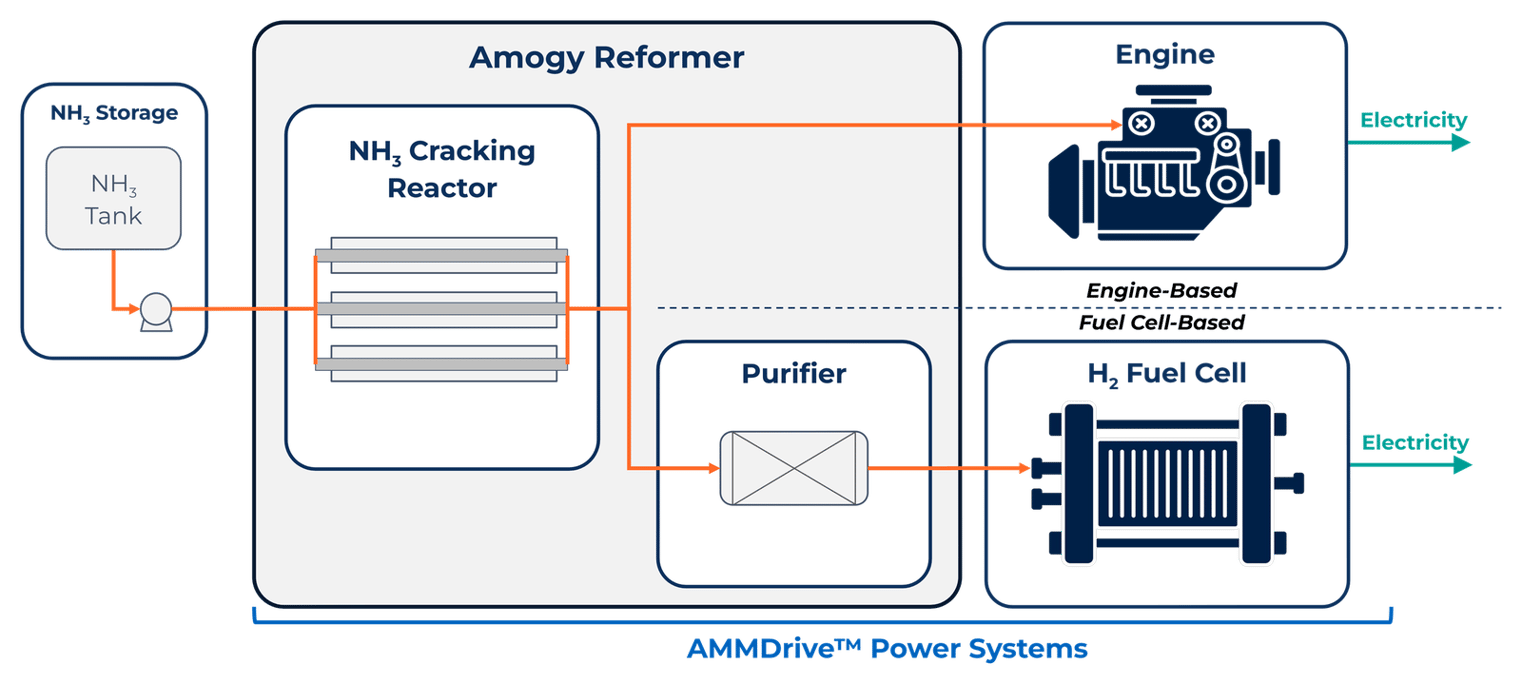
Liquid ammonia is supplied from a storage tank to the reformer.
Amogy’s catalyst splits ammonia into hydrogen and nitrogen, producing a hydrogen-rich gas known as reformate.
The reformate supplies hydrogen for downstream applications, with gas treatment matched to the equipment’s requirements.
For power applications
An engine-generator or fuel cell converts the hydrogen into electricity, depending on the configuration.
Benefits
Amogy’s conversion technology provides the foundation for modular energy systems designed around practical deployment, operation and growth.
Our catalyst enables ammonia cracking at low operating temperatures, producing hydrogen-rich fuel for downstream use.
Use transportable liquid ammonia as the carrier, then convert it where your operation needs power or hydrogen.
Ammonia contains no carbon. Power generation from ammonia is carbon-free at the point of use, with lifecycle emissions determined by how the fuel is produced and transported.
Why ammonia?
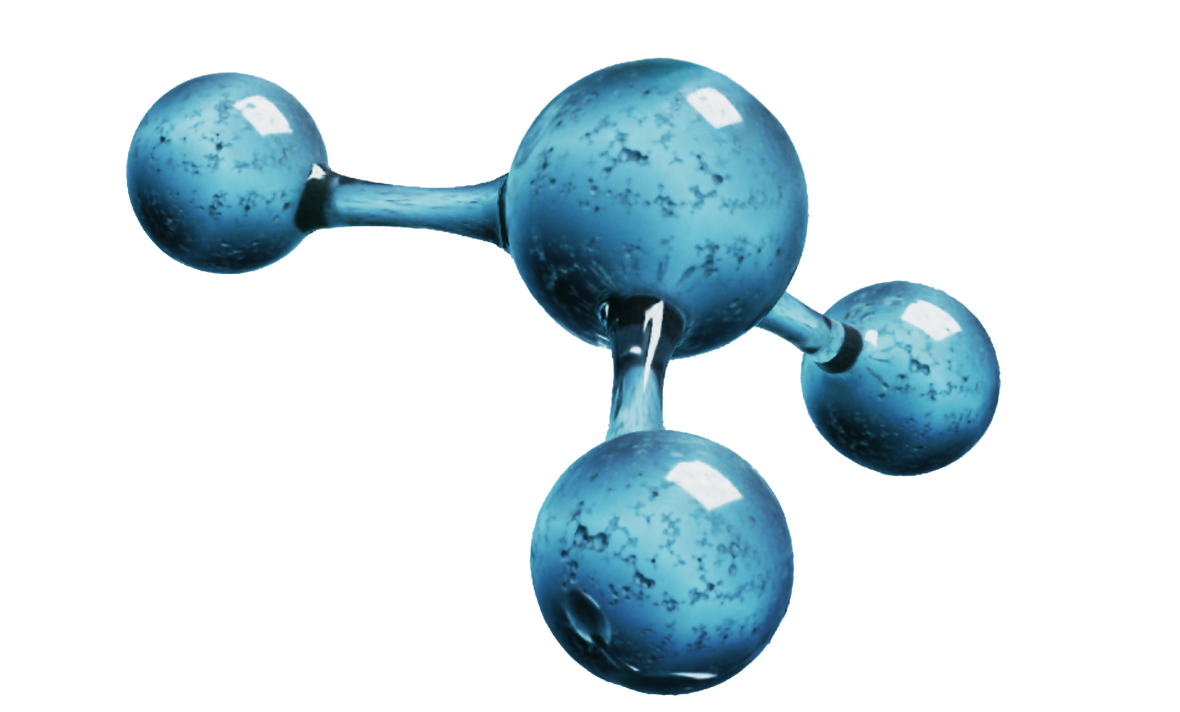
Ammonia is carbon-free and is highly energy dense, making it ideal for power generation, data centers, maritime and heavy industry.
Learn moreSolutions
Choose an integrated power system, a modular reformer for downstream equipment or catalysts for your own cracking process.
Generate electricity onsite with a system that combines ammonia conversion, generation and controls.
Produce hydrogen or hydrogen-rich fuel from ammonia for integration with downstream equipment.
Use Amogy’s catalyst technology within your own ammonia cracking system.
Our technology in action
From a drone flight to a tugboat voyage, Amogy has demonstrated ammonia-to-power in increasingly demanding applications.

Demonstrated ammonia-powered flight.
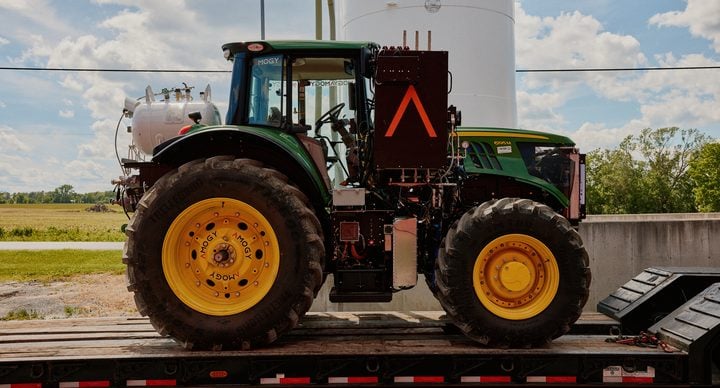
Demonstrated ammonia-to-power in a working agricultural vehicle.
Read the case study
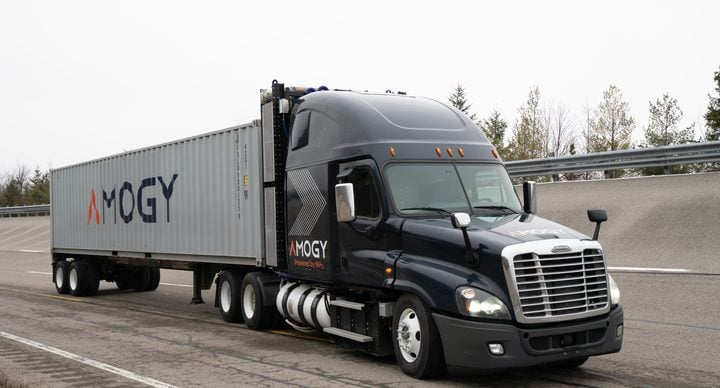
Scaled the technology into a heavy-duty road vehicle demonstration.
Read the case study
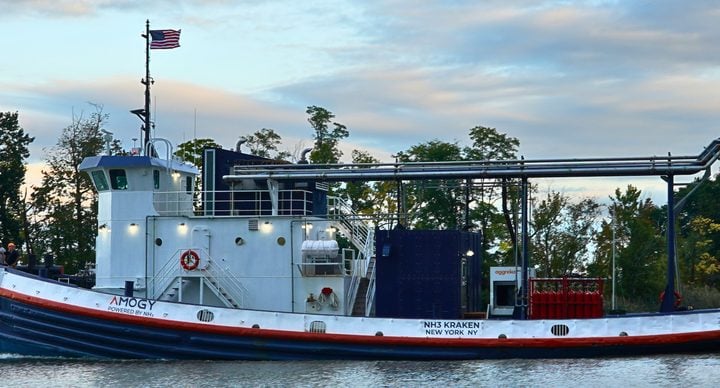
Completed the vessel’s maiden voyage after retrofit with Amogy’s system.
Explore the tugboatIn August 2026, Amogy and 2G Energy successfully completed integrated testing of Amogy’s ammonia reformer with a 2G engine-generator in Houston.
During testing, the reformer supplied hydrogen-rich fuel to the engine-generator, validating the fuel-delivery interface, controls and integrated operation.
Resources
Access technical documentation, validation information and supporting resources for Amogy’s ammonia conversion platform.
Prepare for deployment
Amogy works with your team and project partners to plan for safe operation, maintenance and ongoing support. From site requirements to operator readiness, we help identify what needs to be in place before deployment.
Our catalyst splits ammonia into hydrogen and nitrogen. The resulting hydrogen-rich gas can fuel power-generation equipment or support other hydrogen applications, depending on the configuration.
No. It performs the conversion from ammonia to hydrogen-rich fuel. A separate engine-generator or fuel cell produces electricity. Engine-based systems involve combustion.
Ammonia carries hydrogen in liquid form and benefits from established industrial transport and storage infrastructure. The right fuel pathway depends on your location, supply arrangements and application.
Yes. The AMMDrive™ AH Series is designed to produce high-purity hydrogen (above 99.97%, ISO 14687:2019 Grade D). Hydrogen quality, gas treatment and downstream integration must be assessed for the specific application.
Yes. Amogy has demonstrated systems from a 5 kW drone to the 1 MW NH₃ Kraken tugboat. Integrated reformer and engine-generator testing with 2G Energy followed in 2026.
Ammonia has a long history of industrial use, supported by established handling practices, infrastructure and regulation. As with other industrial fuels, safe use depends on appropriate equipment, procedures and training.
Tell us what you need to power or supply with hydrogen. Explore the products and applications that could move your project forward.